
Who Owns a Langlade County Property? Find the Record
Beacon's parcel record is the fastest way to find the roll entry. It covers any Langlade County parcel. Then confirm the name in LandShark. The county's own plan documents ownership data in Beacon. Each parcel there carries a unique URL. A fresh closing can complicate things. The deed may be newer than the assessment roll. The recorded instrument wins for recency. Keep the legal description beside the names. That habit keeps a result for a different property from being mistaken for the answer you came for.
- Search the property's address, owner name or parcel information in Beacon and select the matching parcel.
- Write down the owner name and legal description shown for that parcel.
- Search LandShark for the newest deed and compare its grantee and land description.
- If a business entity is named, check the Wisconsin DFI corporate record for its registered details.
Beacon Shows the Langlade County Roll Owner
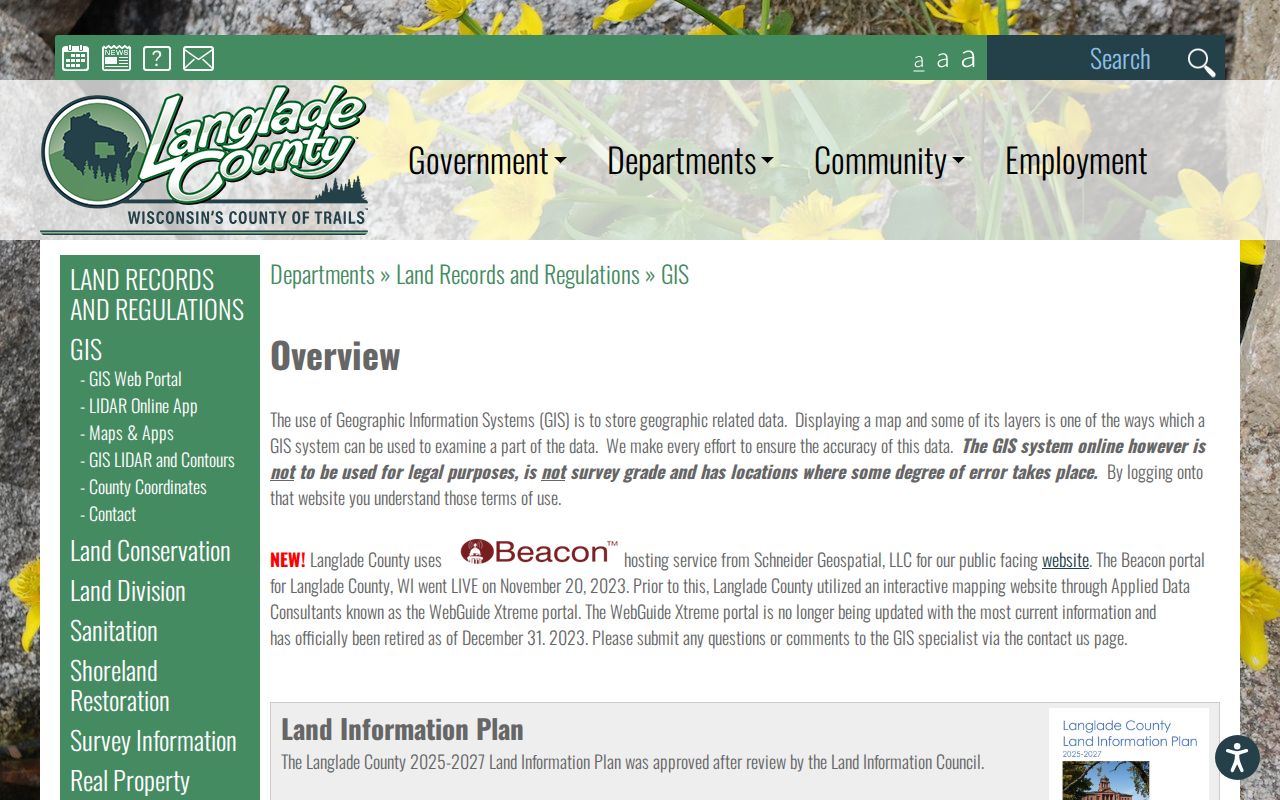
Langlade County's 2025–27 Land Information Plan puts ownership information inside its Beacon parcel records. The plan describes three ways in. Search by address, owner name, or parcel. For parcel tax data, the GIS tips point to the Advanced tab. The Report control opens that parcel's tax details. This works well for linking a roll name to the right parcel. Treat any result as a lead, though. A roll owner is not proof that the last recorded conveyance is valid or that nothing later exists. Save the parcel number and legal description. Beacon's unique URLs cannot be exported. A saved link alone may not retrace your search later, so record the identifiers themselves.
The county gives search and report instructions on its GIS tips page.
Confirm the Roll Name Against a Recorded Deed
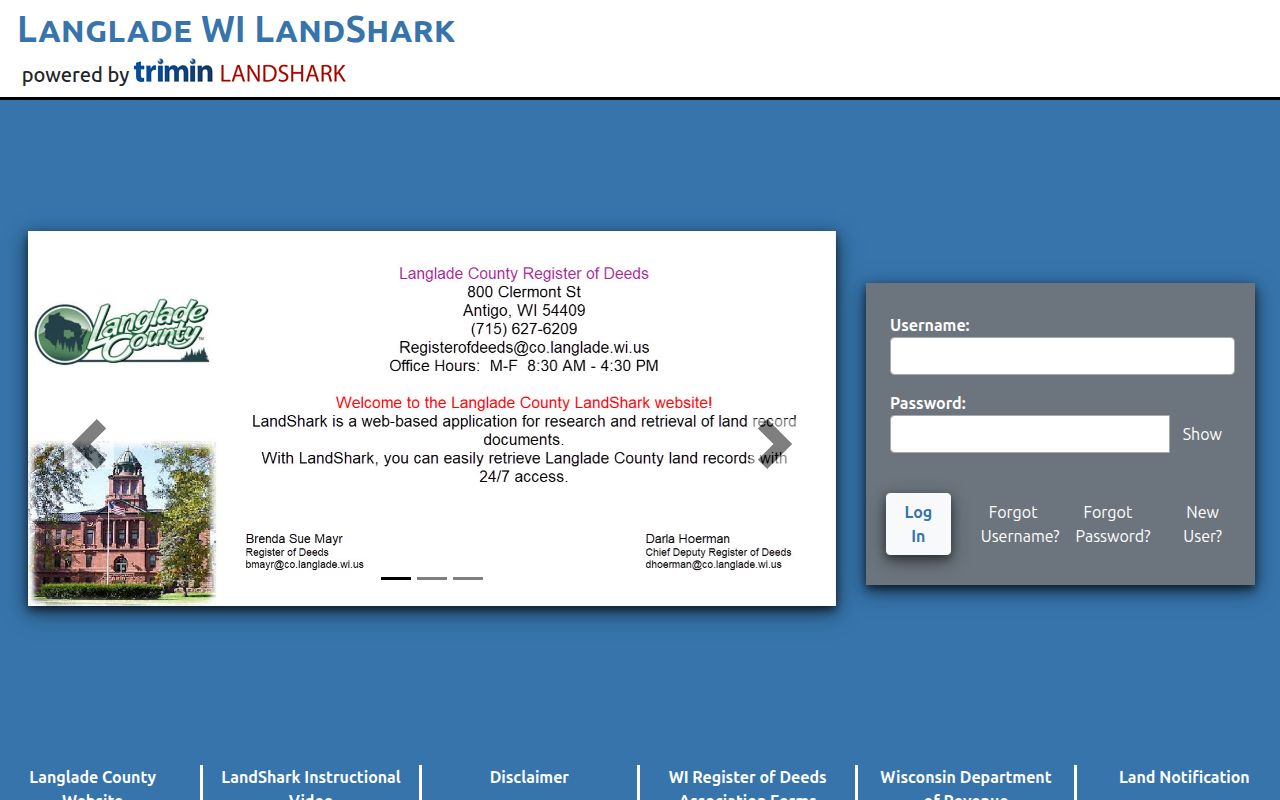
LandShark is Langlade County's public-access application for recorded instruments. Through it, the Register of Deeds records deeds, mortgages, conveyances of title, plats, certified survey maps, revocable trusts, and other filings. Search the Beacon name as a grantee first. When transfer history matters, follow the grantor on that instrument back in time. The county does not state LandShark's oldest indexed year. If the web index stops short of the transfer you need, ask the Register of Deeds directly. Remember what a deed shows. The grantee is the party receiving the stated interest, while the assessment roll can refresh on its own schedule. Compare legal descriptions and recording references, not just two similar names. For a just-recorded transfer, go to the deed. It is the more direct place to confirm the grantee named in that instrument.
Search the current LandShark public-access system for recorded deed information.
Owner Names in the Langlade County Record Trail
Three Langlade County sources do different jobs. Beacon ties an owner name to an assessment parcel. LandShark names the deed's parties. The county tax portal and Treasurer handle collection information, which helps match the account but never decides title. If an LLC holds the land, expect the deed and roll to name the company, not the person managing it.
| Source | Owner Info It Gives | Access |
|---|---|---|
| Beacon parcel record | Ownership data associated with the selected assessment parcel. | Search by address, owner or parcel. |
| LandShark deed index | Grantor and grantee named in recorded conveyances. | Search the public application; confirm older coverage. |
| Wisconsin DFI | Corporate record details for a named business entity. | Use the state corporate records search. |
| County GIS and tax report | Parcel location, ownership context and tax history. | Open the selected parcel report and confirm its year. |
The owner of record is simply the name the relevant public record carries. An occupant is someone who lives there. Neither the roll nor the deed establishes occupancy. A tax mailing address can be somewhere else entirely. Use a parcel lookup to answer property questions, not to identify or approach an occupant.
LLC, Trust and Estate Ownership Needs Context
A deed can vest title in an LLC, a trustee, or an estate representative. So the roll name may not be a person. Wisconsin DFI's Corporate Records Search can surface a business entity's filed details. It cannot, by itself, prove who owns the land. Read the deed's capacity language alongside the parcel description. When an estate transfer is involved, the probate case and any later representative deed explain the authority behind the transaction. The Register of Deeds lists revocable trusts among its recorded materials. That does not make every trust instrument public. Nor does a trustee's name identify every beneficiary. Treat the recorded name as the legal party stated in the document. For access to a related instrument, ask the custodian. When a parcel record names an organization, use that organization name as your search key in the deed index. Then compare the result's legal description with Beacon. DFI's Corporate Records Search can also separate similarly named entities and show their filed details. Keep the roles straight, though. A registered agent or officer is not automatically the grantee, the beneficiary, or the person occupying the property. If the entity later changes its name or status, the recorded deed still identifies the party and capacity used at the time of transfer. The current corporate entry offers a different, dated snapshot.
Key terms. Situs is the property's physical location; mailing address is where tax notices go. A grantee receives an interest in a deed. The owner of record is the name shown by a particular roll or instrument, while title is the legal interest established through a complete review.
Mailing Address and Situs Are Separate Clues
Langlade County tax bills do not always travel far. The mailing address on a tax notice can sit in another town, another ZIP, or another state entirely. A mailing city proves nothing about a parcel's location. Postal lines and municipal lines rarely agree around Antigo, where the city, the Town of Antigo and the Antigo postal area each describe different ground. The county's municipality roster lists the towns plus Antigo and White Lake, so compare the postal address, municipality and taxation district inside the Beacon result rather than treating those labels as interchangeable.
An address search can also come up empty. Fall back on an owner name or parcel number. Verify the legal description before drawing conclusions. For a parcel near the city limits, the Beacon parcel report sorts out which label points to which geographic fact, which keeps the deed record straight before you confirm anything.
Safe at Home Can Affect Address Clues
Safe at Home gives eligible Wisconsin participants a substitute address. Program rules also provide for protected identifying records. That means a public-facing mailing entry may not show where a participant actually lives. Never infer or expose a protected location from other data, and never read an address difference as proof that a parcel record is wrong.
Langlade County offers no property-fraud alert signup. When a deed looks unfamiliar or a name surprises you, contact the Register of Deeds about the instrument. Use the county's posted records channels. Skip unverified third-party alert services.
Keep a name lookup anchored to the land record. Search the parcel or address in Beacon, then copy the legal description. Use the named party as a lead in LandShark. Common names need care. Compare dates and parcel descriptions before linking two results. If the record names a trustee, business or estate representative, preserve that capacity in your notes. An owner lookup tracks the party recorded in a parcel or deed source, nothing more. It is not a general people search, and it does not establish residence, family relationships, or the identity of an occupant.
What a Langlade County Owner Lookup Cannot Prove
Some questions outlive any public lookup. A Langlade County owner search cannot establish who lives at a property, whether a transfer is free of competing interests, or the exact boundary on the ground. A name in Beacon is a tax roll clue. A grantee name in a deed proves only the interest stated in that instrument. Neither stands in for a complete title review. Wisconsin confidentiality rules shield certain participants and records too, so not every person or address appears the same way. When the question is who owns this property, compare the parcel description and the newest deed first. Only then treat the name as an answer.
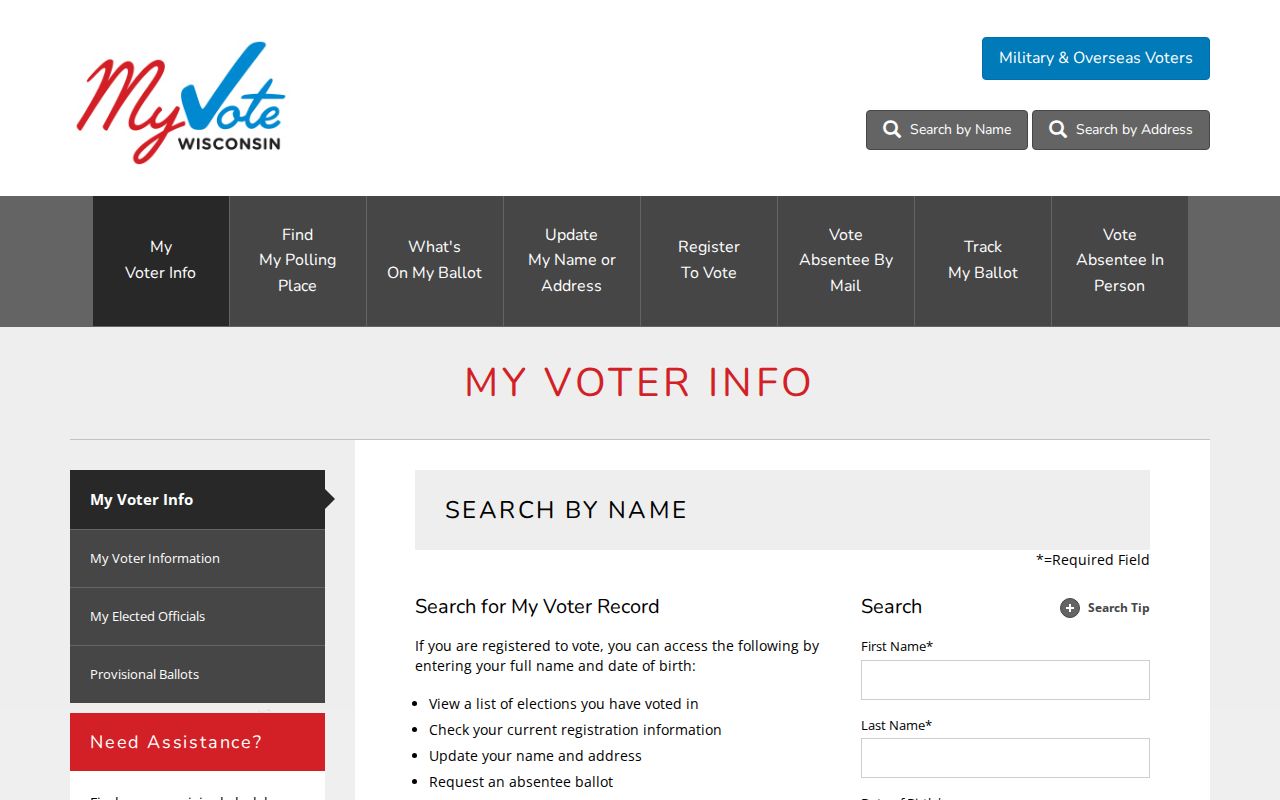
The state's MyVote information page serves election-related name and address lookups; it is a separate record source from Beacon and the Register of Deeds.
Lawful use. Use Langlade County owner information for property research and due diligence. Do not use a lookup to stalk, harass or target a person, and do not assume that a tax-roll entry identifies an occupant.