
Four Langlade County Property Values That Differ
Assessed value, equalized value, estimated market value and sale price are four different numbers. The assessor sets the local figure. That figure supports the town's tax roll. Wisconsin DOR computes an equalized value so municipalities can be compared on one scale. A tax bill may carry an estimated fair-market value built from an assessment ratio. A deed shows what a buyer actually paid.
| Value | What It Is | Where |
|---|---|---|
| Local assessed value | Assessment attached to a local parcel for tax administration. | Beacon and local assessment records |
| Equalized value | Municipal-level measure used to compare assessment levels. | Wisconsin DOR reports |
| Estimated fair-market value | Tax-bill estimate connected to an assessment ratio. | Wisconsin tax bill; confirm the year |
| Recorded sale price | Amount associated with a reported real-estate transaction. | Recorded transfer and DOR sales data |
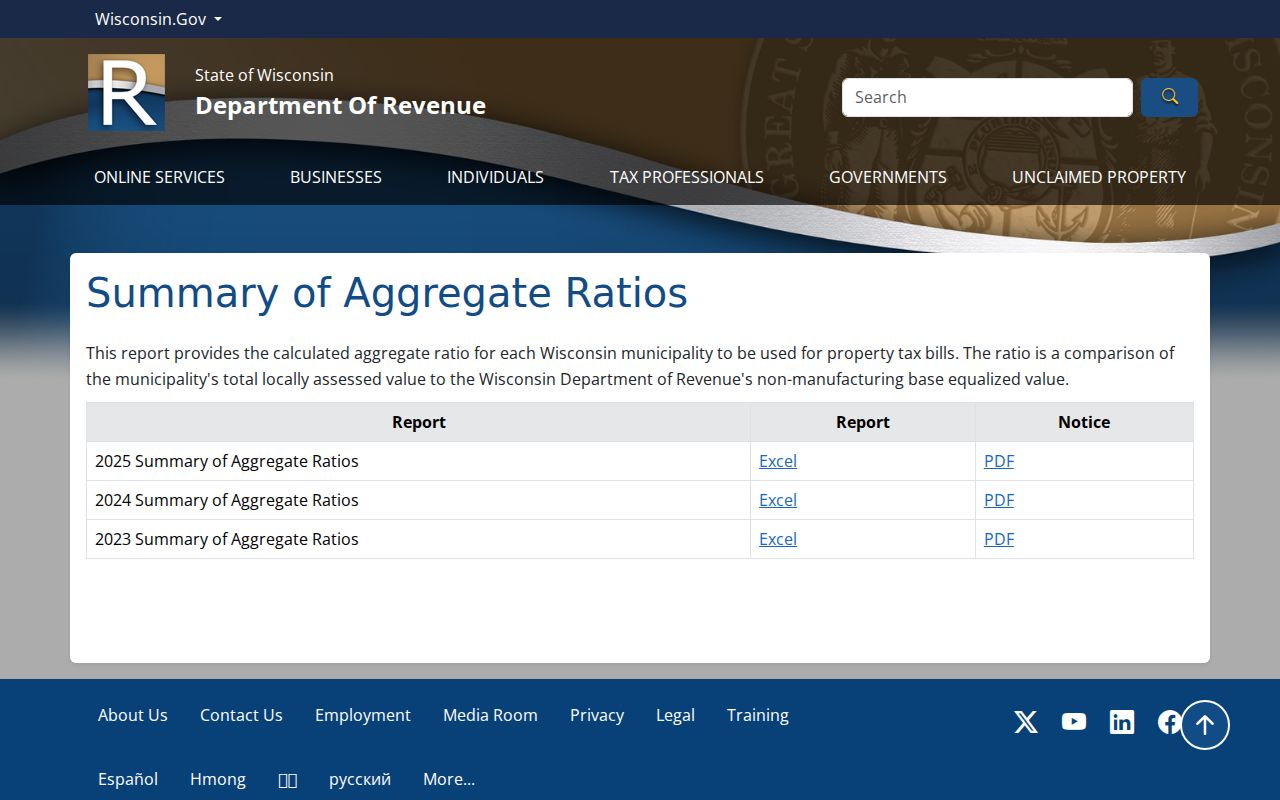
Wisconsin DOR builds its aggregate ratio by comparing locally assessed value with non-manufacturing equalized value. The ratio is municipal. It does not describe one parcel. The 2026 Property Assessment Manual explains how an assessment ratio produces an estimated fair-market value on a tax bill. It also discusses five-year compliance. No published figure gives a Langlade County parcel its own ratio. Note the year, level and source whenever you compare values.
Beacon's Langlade County Assessment Field Is Parcel-Based
Langlade County's Land Information Plan places assessment data inside Beacon's parcel records, alongside ownership, tax history and some recorded-document information. The GIS layer gets at least weekly maintenance. Assessed values do not follow that schedule. Open the live parcel report to see the displayed year and the exact field labels. Record the parcel number and legal description too.
Use Beacon for the parcel's assessment. Turn to DOR reports for the municipality's assessment context. A municipal ratio is an aggregate measure, not an individual home value. A recorded sale adds a market clue, but one transaction does not reset the assessor's figure.
Value terms. Assessed value is the local tax-roll amount; equalized value compares a municipality's assessment level; assessment ratio relates assessed and market measures; sale price records transaction evidence; reassessment is a change to the local valuation process or roll.
How to Look Up a Langlade County Property Value
Start with the parcel in Beacon. Note which kind of value the page displays. Write down the year attached to it. When you compare a sale or a tax bill, match the year and the municipality so the numbers line up. County GIS guidance points to the Advanced tab for parcel tax data, and the Report button opens the selected parcel's tax details.
- Find the property in Beacon by address or parcel identifier.
- Open Report and record the assessment figure and year shown.
- Compare municipal assessment ratios in the DOR reports for context.
- Use the recorded transfer or DOR sales data for a separate sale-price clue.
- Assessed value
- The local value used in the property-tax system.
- Market value
- An estimate of what the property might sell for under defined conditions.
- Assessment ratio
- A comparison used in Wisconsin assessment administration.
Wisconsin DOR Ratios Are Municipal, Not Parcel Appraisals
The Department of Revenue publishes Statements of Assessment and aggregate-ratio reports by municipality. The ratio compares two rolls. It weighs locally assessed values against non-manufacturing equalized value. These reports show how a local tax roll relates to the broader equalized measure, but they offer no sale price and no appraisal for one Langlade County property.
DOR released final 2025 sales reports and assessment-to-sale ratio analysis in March 2026. Note the report year. Note the municipality too. Never treat a county or town average as a parcel-specific adjustment without a proper assessment analysis.
The ratio serves assessment administration. It compares a municipality's local assessments with an equalized benchmark drawn from many properties. It cannot see a parcel's condition. It also misses improvements, location and transaction terms. For a tax question, keep the individual assessment notice and parcel description at the center. For a market estimate, use comparable sales and a qualified appraiser. A statewide ratio can still be cited. Identify its report year and municipality so nobody mistakes an aggregate figure for an Antigo parcel's own ratio.
The state explains its aggregate measure in the Wisconsin DOR ratio materials.
Recorded Sales and Tax Values Follow Different Timelines
A recorded sale proves a transaction happened. An assessment is a tax value. It follows the local assessment process. A sale can be newer than the roll, and its terms may reflect condition, improvements or financing that fit no other property. So the assessed value is not the last sale amount. It is not a promise of future price either.
Wisconsin moved RETR and PAD workflows into My Tax Account in 2026, and DOR released the final 2025 sales-ratio reports that March. Check the DOR's current property-sales search for transaction data. Keep the sale record and the assessment record separate. Bill totals and payment status belong in the county tax account, not in a value comparison.
Antigo's Industrial Park Is Land-Use Context, Not a Trend
Langlade County's Economic Development Corporation describes an Antigo Industrial Park of 620 acres with water, sewer, gas and power. The site reaches Highways 45, 52 and 64. That is a land-use fact. It is not a citywide appreciation statistic. An industrial parcel's sale or assessment should never stand in for a home in a historic district or a residential plat.
Antigo publishes no official value trend line. No fastest-appreciating district is ranked anywhere. A careful comparison would sort historic-center parcels, residential plats, city-edge land and industrial property into separate groups. Then it would weigh current and prior Beacon assessments against DOR municipal ratios and recorded sale data. Do not call one area hotter than another until those figures are assembled.
No Langlade County Revaluation Date Was Verified
Langlade County publishes no countywide revaluation year. No single date covers every parcel for a property owner. Wisconsin's Property Assessment Manual sets five-year compliance requirements. That standard applies statewide. It does not tell you when a particular Langlade County municipality last reassessed its properties. Look at the assessment year printed on the current parcel record. Then ask the local assessor whether a revaluation or a parcel-specific change explains the figures.
Beacon's weekly GIS maintenance runs on a separate clock from the assessment cycle. A map can refresh while values stand still. A new deed can be recorded at any time. The tax roll may still show the old owner of record or an outdated value. Write the source year next to every figure you use. Comparing a recent sale price against a stale appraisal without adjusting for timing invites error.
For tax bill amounts, exemptions, and the local review process, see the Langlade County property tax records guide. Confirm dates with the assessor or Treasurer.
What a Langlade County Property Value Does Not Tell You
An assessed value exists to feed the tax system. It is not a sale appraisal. It does not promise what a parcel will fetch in a given market. Equalized value is a municipal-level figure, while a recorded deed price belongs to one specific transaction. Any property value comparison is only as strong as its source, year, parcel, and definition. Before a transaction decision, bring in a qualified appraiser and current market evidence.
For a tax question, pin down which figure you hold. It may be an assessment, an estimated fair-market value on a bill, an equalized value, or an actual sale price. Each serves a different function. Each can refer to a different year or geography. If the local assessment looks wrong, request the municipality's current open-book and Board of Review instructions; Langlade County's specific form and deadline appear in that material rather than any countywide notice. DOR ratio reports add context on municipal assessment levels. They do not decide a single parcel's appeal.
Value vs price. A Langlade County assessment is not what the property will sell for. It is not an appraisal; get a licensed appraisal when you need a market valuation.