
What Langlade County Property Tax Records Can Show
Beacon's documented parcel data covers ownership, assessment, and tax history, including bills and payments. Not every label shows on every screen. The county plan publishes no complete current field inventory, so treat these categories as a record trail rather than a promise. The roll and the bill also serve different purposes. A tax roll entry carries the valuation. A bill shows the levy calculation and the collection status for one tax year.
| Field | What It Shows | Where |
|---|---|---|
| Assessed value | Local assessment figure attached to the parcel record. | Beacon and the local assessor record |
| Tax history | Parcel history may include bills and payments. | Beacon parcel report |
| Current bill | Amount and year shown for collection; confirm the live balance. | Catalis tax portal and Treasurer |
| Delinquency | Real-estate collection status belongs with the county Treasurer. | Treasurer; portal warning applies to personal-property balances |
| Equalized value and ratios | Municipality-level comparison for assessment administration. | Wisconsin Department of Revenue reports |
Equalized value is not a parcel-level sale estimate. It is an aggregate figure. Wisconsin DOR describes aggregate ratios as a comparison between locally assessed value and non-manufacturing equalized value. The Wisconsin Property Assessment Manual covers the assessment ratio used to estimate fair market value on a tax bill and discusses five-year compliance. A recorded sale is transaction evidence, not the assessed value. The tax amount is neither measure.
Beacon Connects the Langlade County Parcel and Tax History
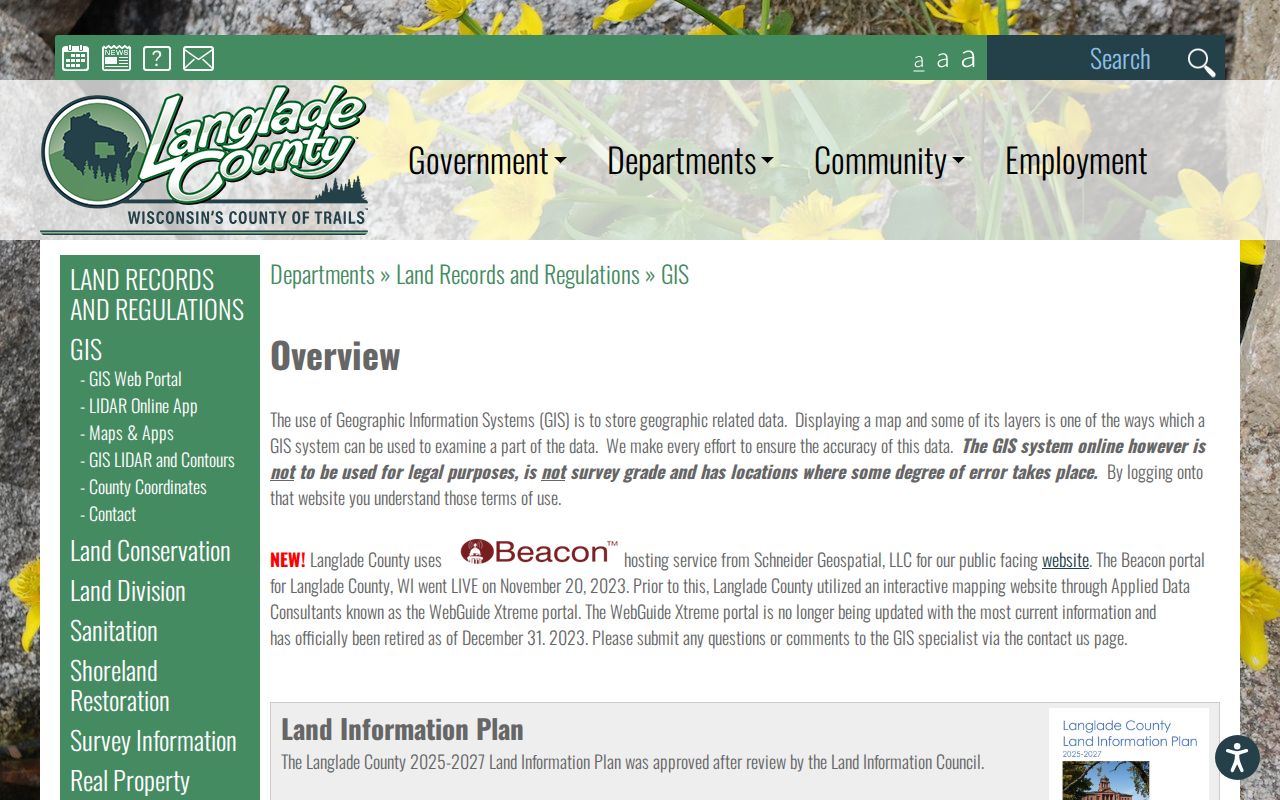
The county's GIS instructions call the Advanced tab the preferred route to parcel tax data in Beacon. Select the parcel there. Then use Report in the Parcel Feature Information frame to open its tax details. The 2025–27 Land Information Plan says a parcel URL can carry ownership, assessment, tax history with bills and payments, and some document information. GIS gets maintenance at least weekly. Assessment runs on its own cycle. A fresh map update does not by itself mean the tax value changed.
Beacon supports address, owner-name, and parcel searches. The exact live field labels and a complete parcel-card inventory are another matter. Treat the table as a search map. Check the current screen before relying on any field name.
| Search route | Documented use | Check before relying |
|---|---|---|
| Address | Locate the situs parcel in Beacon. | Postal city may differ from municipality. |
| Owner name | Search the owner information associated with a parcel. | Exact matching and display fields were not captured. |
| Parcel identifier | Carry the same land record between county views. | Format remains unverified in the research. |
The county GIS page describes the report control; follow the Langlade County Advanced-tab guidance to open a parcel's tax details.
How to Look Up a Langlade County Tax Bill
Beacon works well for locating a parcel and viewing its reported tax history. The Catalis Tax Portal has a separate guest sign-in. That portal holds the county tax information. The Treasurer page covers collection instructions and delinquency duties. Match the parcel and tax year before comparing totals. If a display conflicts with a bill or an older balance, the Treasurer's record settles it.
- Find the parcel in Beacon by address or parcel identifier and note the tax year shown.
- Open the parcel Report or the Catalis guest portal to review the available bill and payment history.
- Compare the roll value and bill figures only after matching the property and year.
- Contact the Treasurer about a delinquent real-estate balance or a portal warning.
- Assessed value
- The local assessment used in the property-tax system.
- Equalized value
- A DOR measure used to compare municipal assessment levels.
- Estimated fair-market value
- A tax-bill estimate tied to the assessment ratio, not a new appraisal.
- Tax levy
- The amount raised through property taxation for the bill's taxing units.
Read the Catalis Warning Before Using Old Tax Records
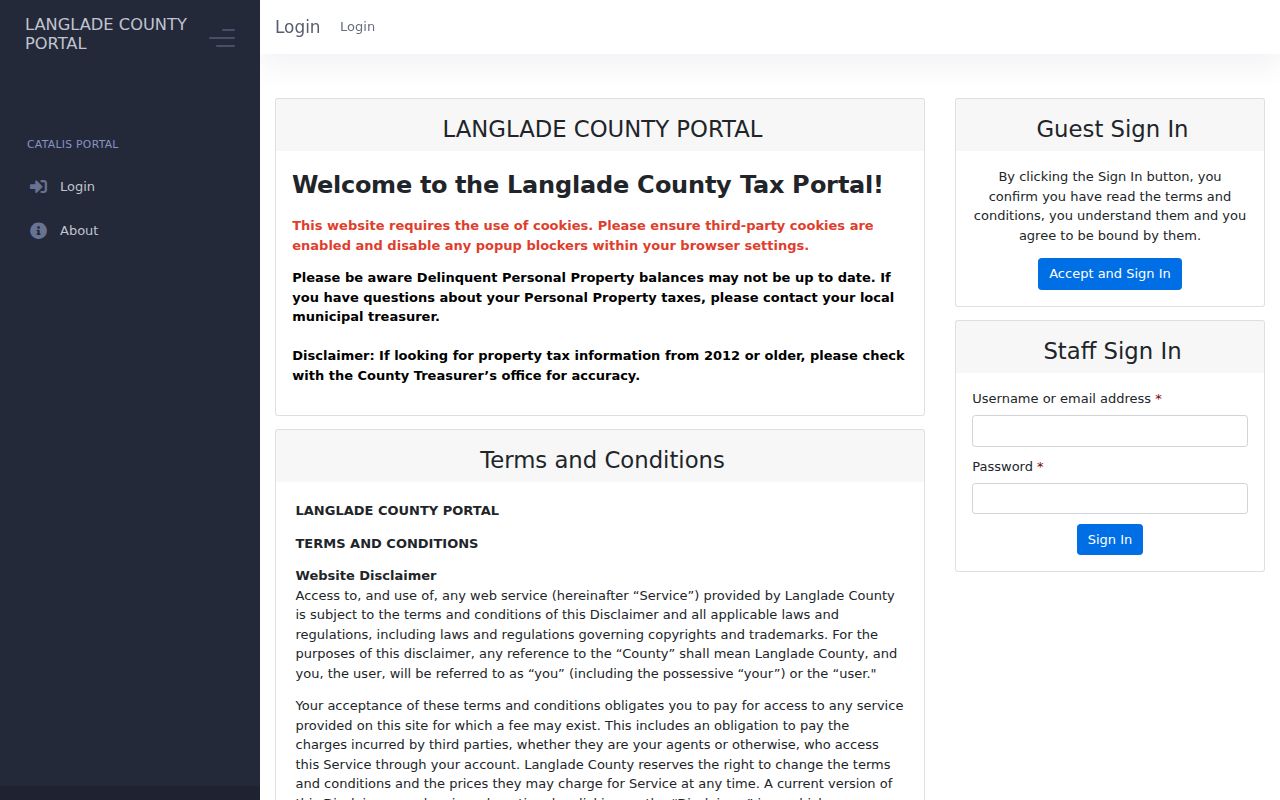
The Langlade County Tax Portal's terms caution that personal-property delinquency balances may not be current. Data from 2012 and earlier needs the Treasurer's verification as well. Those are the county's own warnings. Neither is a reason to discard a current bill. They simply mark the years and balances that need an office check. Record any past-year tax amount with its year and source so it is never mistaken for the amount now due.
Keep the parcel number, tax year, and portal result handy when you contact the Treasurer. Ask the office to confirm the current collection status. Do this if the portal is unavailable. Do it if a balance looks inconsistent. The online record is a starting point. The office keeps the authoritative account.
The portal's guest page contains the sign-in and accuracy notice; review the Catalis tax portal terms before using an older balance.
January and July Installments Need the Current Bill
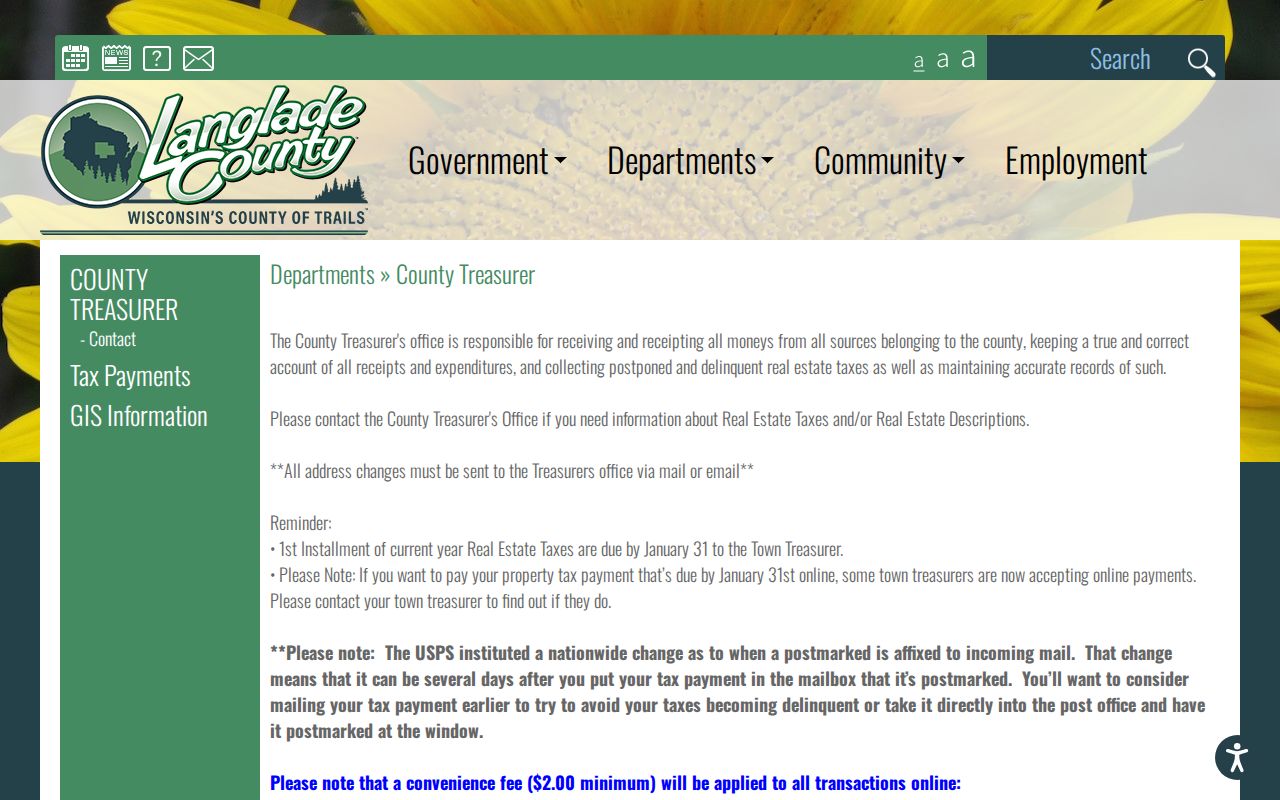
County collection information marks January and July as the installment points for property-tax payments. Take the exact dates from the bill. Take amounts from the Treasurer's current instructions. Take payment methods from the current instructions too. A general calendar is no substitute. The balance depends on the tax year and the account. A prior bill is therefore not a safe guide to a current installment.
A buyer and seller may discuss taxes at closing. The county's collection record still follows its own posting schedule. Payment history explains what was collected. Deed and closing documents address how the transaction handled charges between the parties.
Use the Treasurer's property-tax page for the latest due-date and delinquency instructions.
Wisconsin DOR Ratios Put a Local Assessment in Context
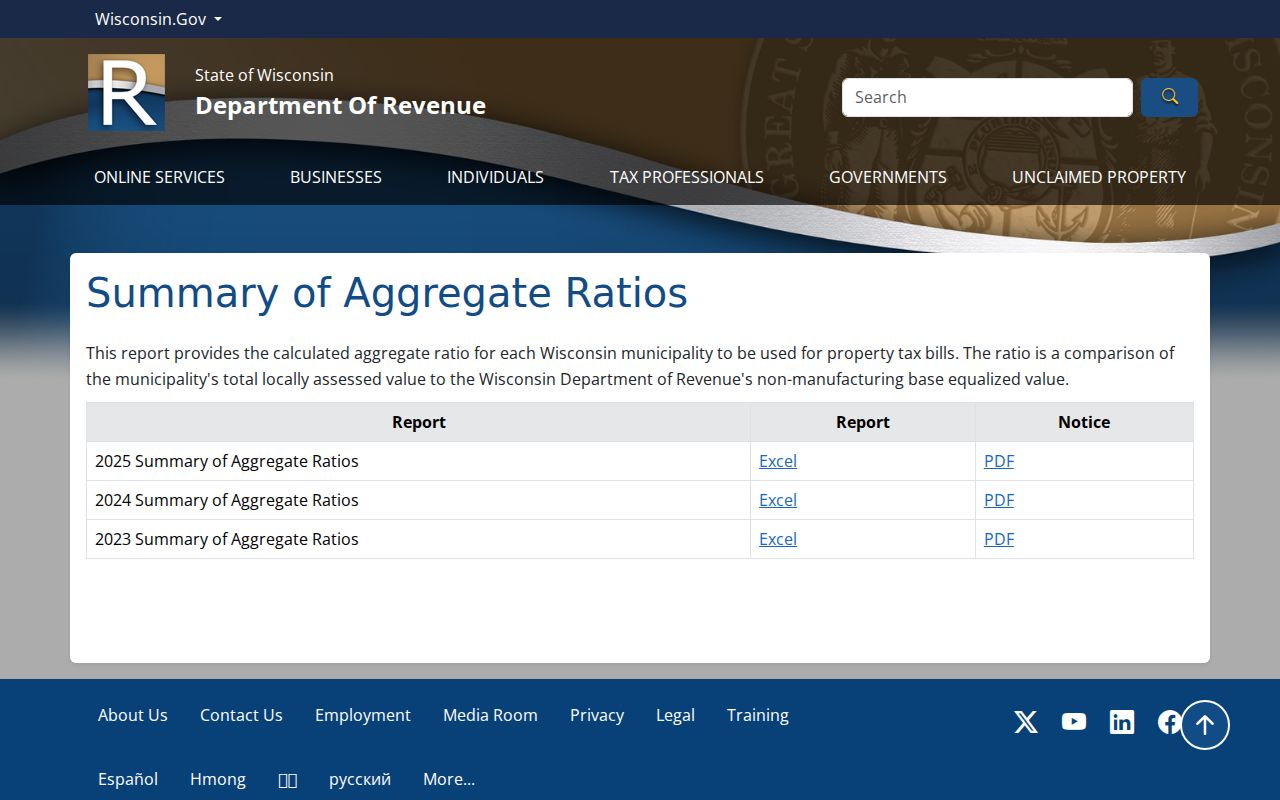
The Wisconsin Department of Revenue publishes municipality-level Statements of Assessment and aggregate-ratio reports. Its ratio explanation compares locally assessed value with non-manufacturing equalized value. The 2026 Wisconsin Property Assessment Manual shows how an assessment ratio is used to estimate fair-market value on a tax bill. It also discusses the five-year compliance material. These reports explain assessment levels across a municipality. They do not replace a parcel's local assessment. Nor do they predict what one property would sell for.
DOR also released final 2025 sales reports and assessment-to-sale ratio analysis in March 2026. The state moved RETR and PAD workflows into My Tax Account in 2026. When researching a sale, keep the transaction amount distinct from the assessed value. Keep it distinct from the tax bill too. The property-sale record is evidence of a transaction. Assessor and Treasurer records govern tax administration.
The DOR explains how aggregate ratios are built; consult the Wisconsin assessment-ratio report for municipal context.
Check the Municipality Before Comparing Tax Entries
A Langlade County mailing address does not settle which municipality taxes a parcel. The county includes the City of Antigo, the Village of White Lake and town governments. Antigo postal geography can reach beyond the city limits. Beacon's municipality and taxation-district fields, where shown, tie a parcel to the right local tax roll. A ZIP code is delivery geography. It is not an assessment or zoning boundary.
Tax-roll mailing information can also diverge from the physical situs. An owner may receive a tax bill at another address. The parcel stays in Langlade County. When figures look odd, compare the municipality, taxation district, tax year and situs. Do this before assuming two records describe the same parcel.
Assessment Questions Need a Local Review Calendar
Wisconsin assessment procedure includes an open-book period and a Board of Review process. Langlade County publishes no countywide appeal form, local calendar or filing deadline. Never rely on a generic date borrowed from another municipality. Contact the local assessor or clerk named for the property. Ask for the current assessment notice, open-book dates and objection instructions. Ask also for the evidence the Board of Review requires. A dated notice and the local instructions control the next step.
Gather the parcel report, the assessment year and the property description. Bring reliable sale or condition information before going further. DOR ratios explain municipality-level assessment context. They do not decide an individual objection. Keep the request and response with the tax-year record for reference.
Do not treat an online parcel map change as a signal. That change does not mean the review period is open. The county plan's weekly GIS maintenance is a mapping schedule. It is not a Board of Review calendar. Check the actual assessment notice instead. Ask the assessor or municipal clerk how to inspect the record. Ask what evidence the local board accepts and how an objection must be submitted. A parcel inside Antigo or another municipality follows that local office's instructions. No single countywide deadline or one form applies to every taxing jurisdiction.
Appealing a Langlade County Assessment
An assessment objection targets the local parcel valuation. It is not a challenge to a Wisconsin DOR municipality ratio or a tax-bill balance. Confirm the assessment year and parcel description first. Then ask the assessor or municipal clerk how to review the record during open book. Ask also what the Board of Review requires. Bring parcel-specific information: comparable sales, a correction to the property description or documented condition details. Langlade County publishes no single local form, calendar or filing deadline. Obtain those instructions from the municipality before relying on any date or submitting an objection.
Appeal timing. The available research does not verify Langlade County's current local deadline or appeal form. Ask the assessor or municipal clerk for the current open-book and Board of Review calendar before filing.